Life Is Strange: Reunion - The End of an Era
The Life Is Strange franchised gripped me at an early age when I first watched playthroughs of it on YouTube courtesy of personalities like Jacksepticeye. I’ve played every single game in the series and have strong feelings about each one, including Life Is Strange: Reunion, the most recent one from Deck Nine. Overall, I’ve thoroughly enjoyed all of the games simply because of how Dontnod originally set the series in a unique direction that brought in a player base that embraces fresh gameplay, narratives, characters, and themes. The same can be said about my time with Reunion. However, while this and none of the other games stood out as video game masterpieces, I felt a particular level of disappointment with Reunion. Interestingly, it doesn’t have anything to do with this being Max and Chloe’s supposed final hoorah.
Sound Narrative
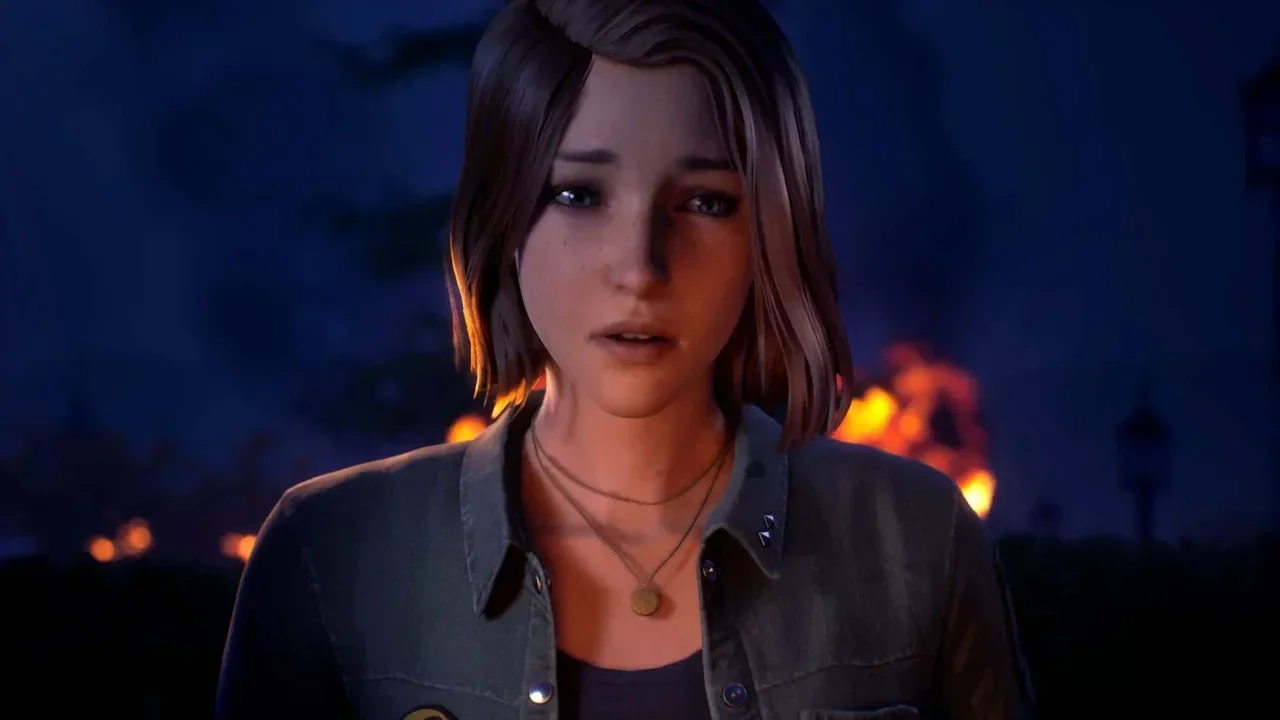
It only makes sense to start where any Life Is Strange game does: the narrative. The franchise is a hallmark of the story-driven genre. The first game captured audiences with its charm, plot, and well-written cast of characters headed up by two strong female leads. Underneath, a mystery brews until it eventually boils over.
Interestingly, Reunion does the opposite. Reunion focuses on the boiling point, and Max and Chloe must do everything in their literal powers to prevent that boiling point from being reached. Along the way, the mystery lies within one question with no clear or simple answer: how does that boiling point get reached? Along the way to answering this question, the player explores themes of loyalty, love, power, and more.
I have to applaud the writing team on the contained complexity of the plot and setting. Much like all of the other games in the series other than Life Is Strange 2, Reunion flawlessly limits its setting to a small town—Lakeport, Vermont, the town in which Caledon University resides and Life Is Strange: Double Exposure takes place—with limited locations. Like characters, those locations interconnect and have relationships with one another that are integral to the mystery at play. The plot maneuvers quite well between these different locations, each one with a bit more to it than initially meets the eye.
The story and lore of everything and everyone connect without any glaring loose ends. Reunion holds a very valuable characteristic that’s shared by the rest of the series: you don’t need a wiki to keep track despite time between play sessions and a spider web of important narrative points.
A Mishmash of Characters
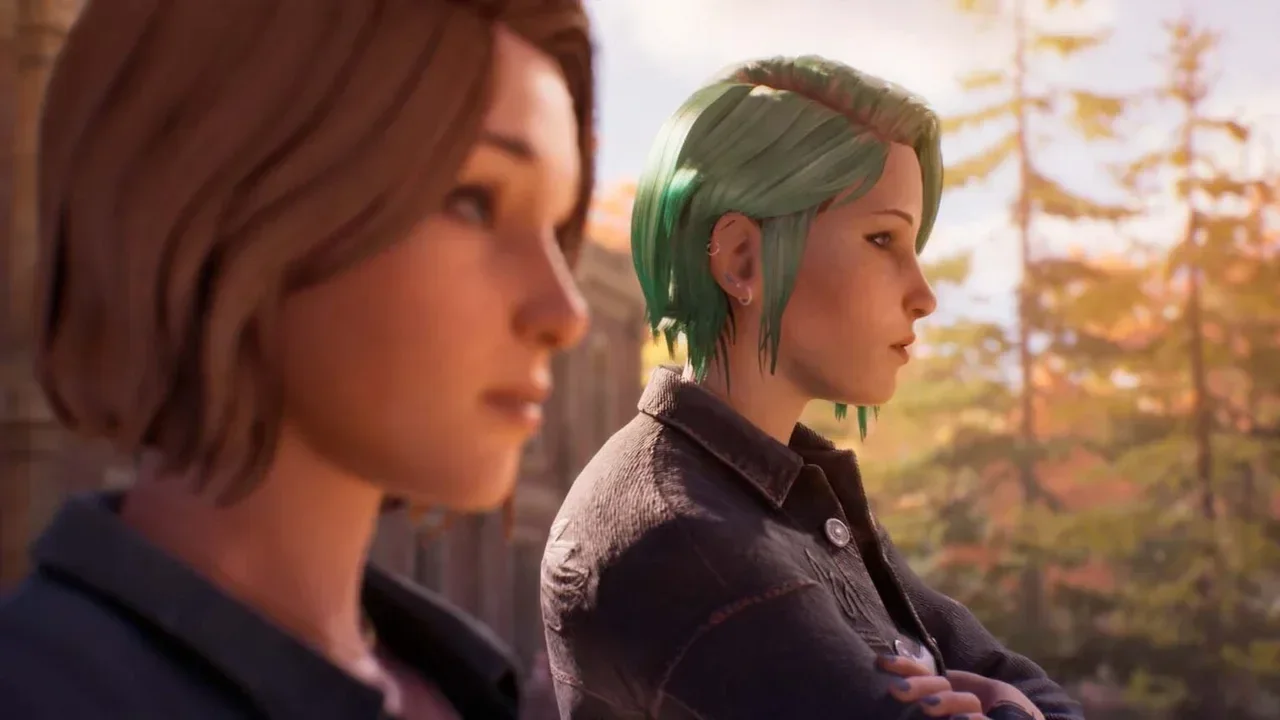
Reunion is the first time since the original game that Max Caulfield and Chloe Price co-lead the cast, bringing with it their unique chemistry. The writers did a decent job staying true to their relationship while introducing new elements stemming from their separate growth.
I largely believe that through three different entries of the series, including Reunion, and two different development studios, Max’s character has remained consistent in terms of quality and personality. I think the fact that Hannah Telle is and conceivably will be the only actress to portray Max in the video game series has put the stamp on that consistency. Max’s life story as we witness it from instances of being a young girl through the conclusion of Reunion feels complete and character-appropriate.
I don’t think the same can necessarily be said about Chloe. Between the prequel, Life Is Strange: Before the Storm, and this latest title, I haven’t loved what Deck Nine has done with Chloe. While I hate to say it, I do believe a large factor is the replacement of Chloe’s voice actress. Rhianna DeVries does her best and succeeds in a lot of ways. Ultimately, though, the character falls flat without the original line delivery of Ashly Burch. However, the voice acting doesn’t change the fact that a lot of lines written for Chloe throughout Reunion (and Before the Storm, for that matter) simply don’t feel authentic. The lines meant to capture Chloe’s sass oftentimes penetrate the ear in a forceful, uncomfortable kind of way, and the lines that don’t make the attempt spawn a different characterization altogether. When combined, the writing leaves Chloe a husk of her former self, devoid of the personality that truly completed her interactions and therefore relationship with Max.
The side characters largely remain unaltered compared to Double Exposure, something that I expected but lament. Double Exposure and Reunion’s secondary and tertiary cast members largely fall flat. I don’t believe this manifests from poor character writing. Each character has very clear motivations. Rather, they don’t seem to come together as a cohesive whole largely due to the dialogue.
A common thread that sews the original game and Reunion together is mystery. However, in the first game, the secondary cast of characters was deeply engrained in the world; these characters talked and behaved like people living their normal lives and being themselves while a mystery evolved around them. In contrast, all of the characters in Reunion seem to purely exist for the purpose of wrapping bows around multiple interconnected mysteries as opposed to actually acting like believable humans. This dramatically hurts the immersion, making choices feel like they’re affecting checklists of personality traits rather than people with lives and feelings.
Technically Unimpressive
Double Exposure didn’t knock my socks off by any means, but it felt fairly competent from a technical standpoint. Given the continuity of characters, locations, mechanics, art style, and game engine, I expected at least that much from Reunion. I figured this level of continuity combined with the fact that Double Exposure and Reunion’s narratives were likely crafted in tandem would account for the ability of Deck Nine to get Reunion out the door just 17 months after its predecessor. However, while at least some of those likely were contributing factors, it appears a lack of polish also did the trick.
To start, I spent my first hour or two in Reunion constantly going back and forth between the game, the settings, and my hardware diagnostics. Given current hardware prices, I have a gaming rig that’s probably valued between $4,000 and $5,000. Believe it or not, despite that valuation, it still doesn’t even have the latest stuff. However, it’s plenty to get something beefy. With all due respect to Life Is Strange, it’s not a series known for its extreme graphical fidelity and photorealistic environments. There’s no reason I should have to run the game on medium-low settings with my rig just to achieve a consistent framerate. Thankfully, a patch shortly after the launch of the game fixed some of these problems right up. Nonetheless, it speaks to that lack of polish.
Ultimately so many aspects of the game just feel unfinished. I worry that this speaks to the uncertain future of Deck Nine as a studio. Sales of Double Exposure reportedly weren’t great, and in 2025, Deck Nine was hit by an undisclosed number of layoffs and failed to have someone present at GDC 2025 to collect an award that it won for Social Impact. A lot of these issues are so glaring and immersion-breaking that I have to believe that somebody at some point caught them and decisions had to be made to deprioritize them and correct the appearance with scotch tape.
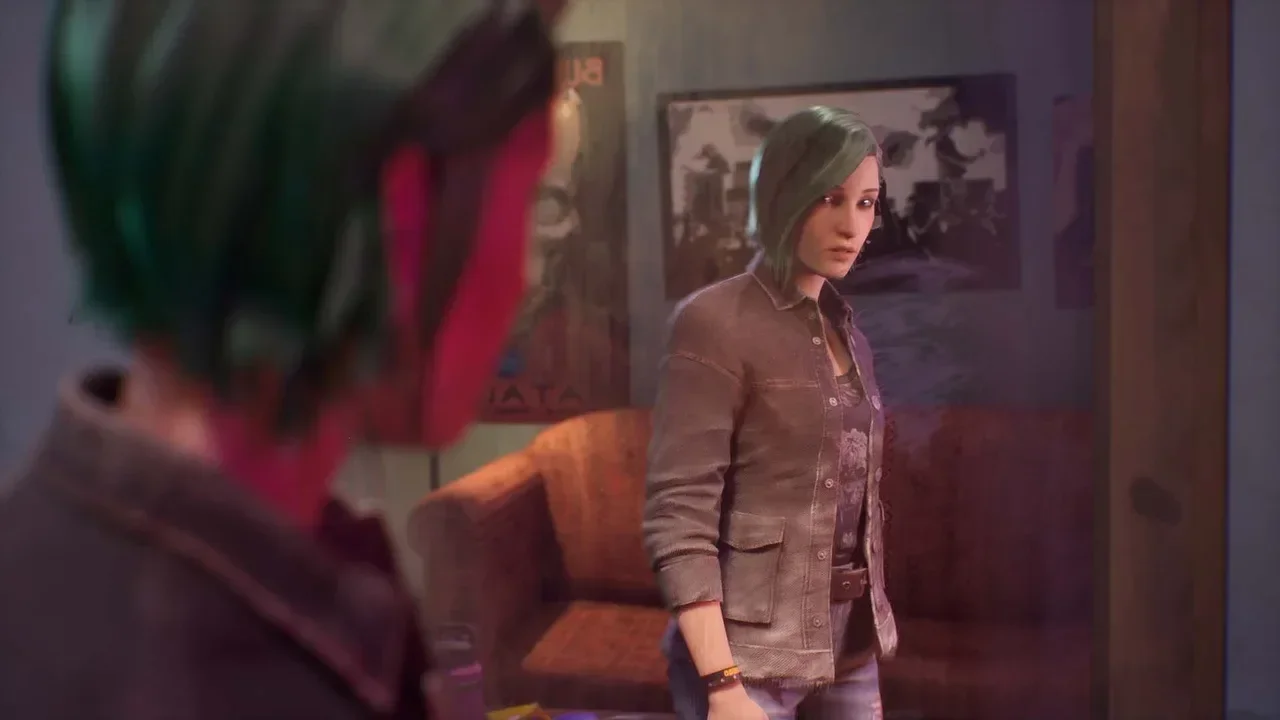
More specifically, I’m referring to several instances throughout the game where it’s clear that the development team simply couldn’t finish an animation in time, get a proper voice over recording of lines, or find/record the right ambience to go along with a particular scene. The biggest example that sticks out in my mind is a series of phone calls throughout the game where the voice acting is there and solid, but the animations are simple idle animations that don’t match the character’s emotion, and cinematic camera pans are deliberately crafted to exclude the character’s face while they talk to avoid having to animate facial performances. Ultimately, I commend Deck Nine for their efforts in hiding these big misses, but it wasn’t enough to make me question how much longer Deck Nine has.
But It’s Still Fun!
Despite all of my criticisms, Reunion still kept me entertained. If the characters grabbed me more, I would compare it to something like The Elder Scrolls V: Skyrim. Like Skyrim, the game has many flaws, but ultimately, a flawed game that’s fun will always trump a perfectly built game with no allure.
Typically, my barometer for for enjoyment in a Life Is Strange game has always been heavily tied to how the ending sequences make me feel. When the ending can hit home emotionally, that tells me that the rest of the game largely did the job it needed to do as far as storytelling goes. While Reunion is probably my least favorite in the series, making it a disappointing ending for the Chloe and Max saga, I leave this post praising Deck Nine for daring to tackle such a beloved character dynamic that was achieved by a different studio with a different team and different tools. The final product didn’t hit home, but it still is memorable and faithfully continues the franchise in a meaningful way.
My hope is that Deck Nine can continue building Life Is Strange games. While things appear rocky at the studio from the outside, they’ve done a lot of good with the franchise, and I never want to run out of Life Is Strange.